The Sims 4 Marketplace Explained: Moola, Maker Packs & CC
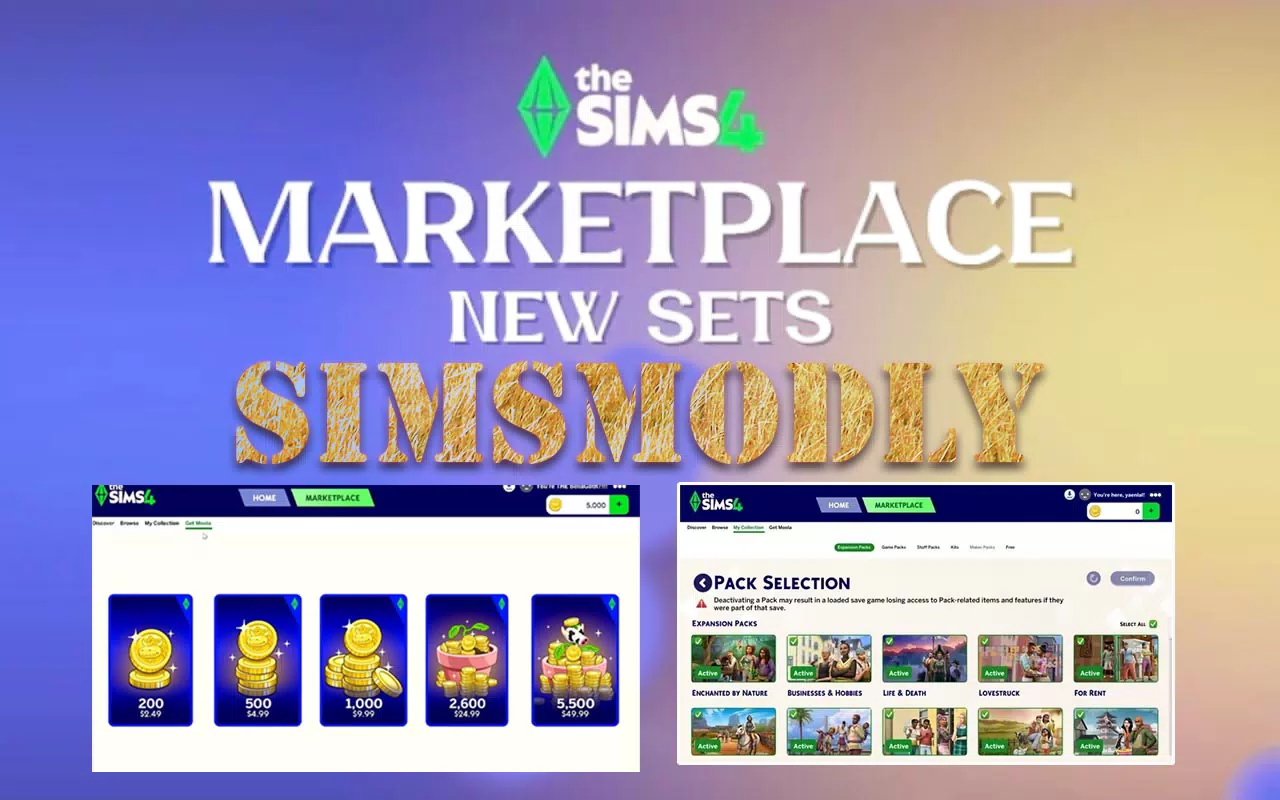
The Sims 4 Marketplace changed one of the most familiar parts of the game in 2026. Instead of buying all of your official Sims 4 content through the same stores and storefronts you've always used, there's now a dedicated Marketplace built into the game, with a new currency called Moola and a new type of content called Maker Packs.
If you've opened The Sims 4 recently and wondered what the Marketplace is, why there's a new currency, or where all these Maker Packs are coming from, you're not alone. The system is new enough that some of its rules aren't immediately obvious — and for players who've spent years inside the independent CC community, it also raises a bigger question: what happens to the culture that built Sims custom content in the first place?
Here's how the Marketplace works, what you can buy there, how Moola fits into it, how Maker Packs differ from regular Sims 4 content, and why long-time CC fans have mixed feelings about it.
What Is The Sims 4 Marketplace?
The Sims 4 Marketplace is EA's official storefront for downloadable Sims 4 content. It launched on PC and Mac on March 17, 2026, and subsequently became available on consoles as well.
The important part is that the Marketplace isn't simply another name for the Gallery or the existing EA store. It's a dedicated place where players can discover and purchase different types of Sims 4 content, including content made by EA's approved Makers.
That last part is what makes the Marketplace different from the traditional Sims 4 store model. The Sims community has been making custom content for years, but Maker Packs bring selected creators into an official system. Their creations can be distributed through the Marketplace rather than being downloaded from an independent CC website.
EA describes the Maker Program as an initiative that allows approved creators to publish their work directly through the official Sims storefront.
So, in simple terms:
The Marketplace is the official storefront. Makers are the creators. Maker Packs are their downloadable creations. Moola is the currency used for certain Marketplace purchases.
That distinction makes the rest of the system much easier to understand.
When Did The Sims 4 Marketplace Launch?
The Marketplace launched on PC and Mac on March 17, 2026. EA initially announced that console support would follow, and the Marketplace reached PlayStation and Xbox in April.
The console launch also changed how Kits are handled on those platforms. Kits are no longer available through the PlayStation or Microsoft Stores, although Expansion Packs, Game Packs, and Stuff Packs remain available through those storefronts.
The Marketplace therefore isn't just an optional website sitting alongside the game. It's becoming part of how Sims 4 content is distributed.
What Can You Buy on the Marketplace?
This is where the Marketplace can get confusing because not every type of content uses the same payment method.
The Marketplace includes several categories:
Maker Packs
Kits
Expansion Packs
Game Packs
Stuff Packs
The first two are particularly important because they interact with the new Moola currency. Expansion Packs, Game Packs, and Stuff Packs continue to use real-world currency.
Maker Packs contain original Create-a-Sim and Build/Buy content created by approved Makers. EA has described these packs as a way for community creators to bring their own designs into the official Sims 4 ecosystem.
That means the Marketplace isn't simply a replacement for the Gallery or a new place to buy existing expansion packs. It introduces a new category of creator-made content alongside EA's own releases.
What Are Maker Packs?
Maker Packs are content packs created by Sims Makers and distributed through the official Marketplace.
The creators behind them aren't simply random CC authors uploading files to a public database. They're part of EA's official Maker Program.
Makers can create 3D assets for The Sims 4, including things for Create-a-Sim and Build/Buy. Once their work is approved, they can publish it through the Marketplace and earn from their creations.
This creates an interesting middle ground between traditional EA content and the enormous world of community-created CC. The content is still made by individual creators, but the distribution happens through an official Sims system. For players, that means the experience is considerably closer to buying a normal Sims 4 content pack than downloading a .package file from a CC website.
Who Are the Sims Makers?
A Maker is a creator participating in EA's official Sims Maker Program. The program is specifically aimed at people who create 3D content for The Sims. EA provides approved Makers with access to its Maker Suite and other resources used to prepare content for Marketplace releases.
Some Makers already have long histories in the Sims custom-content community — and that's exactly what makes the program so interesting, and for some longtime fans, a little unsettling. It brings creators who traditionally worked independently into an official distribution system. Instead of downloading a creator's work from a separate website, extracting an archive, and placing files into the Mods folder, Marketplace content is delivered through the game's own ecosystem.
From Tumblr and TSR to CurseForge: A Quick Look at Where Sims CC Came From
To understand why the Marketplace feels like such a big shift, it helps to remember what came before it.
For years, Sims 4 custom content lived across a scattered but tightly-knit web of platforms: Tumblr blogs, The Sims Resource (TSR), ModTheSims, and eventually CurseForge, which grew into one of the biggest hubs for CC and mods. These sites became the places where players could reliably find and download content they trusted, built by creators who were, for the most part, independent hobbyists first and businesses second.
Some of those platforms did let creators earn money — TSR has had premium content for a long time, and Patreon-style early access became common practice across the community. But the culture around it was different. The general spirit of the CC world leaned toward being free and independent. Early access might cost a little, but content almost always became free to everyone eventually. Creators built reputations, not storefronts.
And that culture is still very much alive. If you go looking for a specific hairstyle or CAS item today, there's a real chance you'll still end up scrolling through Pinterest boards and old Tumblr archives — that's still where a lot of players, myself included, go looking first.
Why the Marketplace Makes Some CC Fans Nervous
Now EA has stepped directly into that world, and it's not a small move. Some of the CC creators who already built recognizable names for themselves in the independent scene have joined the Sims 4 Marketplace as official Makers.
For a lot of long-time fans, this raises one obvious worry: will everything end up paid?
That fear comes from a real cultural difference. In the traditional CC community, the norm has generally been that content is either free from the start or becomes free after a short early-access period. Paying was often optional — a way to support a creator you liked, not a requirement to access their work at all.
The Marketplace works differently by design. Maker Packs are sold through Moola, EA's official currency, and purchases are non-refundable. There's no built-in expectation that content becomes free later. That's a meaningful shift from the norms that shaped Sims CC culture for over a decade, and it's easy to see why some players are watching the Marketplace with a bit of caution rather than pure excitement.
At the same time, EA has tried to soften that concern somewhat by introducing Free Maker Drops, which bring free creator-made content to the Marketplace alongside the paid Maker Packs. It's not the same as the old "everything eventually becomes free" culture, but it does show that the Marketplace isn't intended to be a fully paywalled system either.
Whether that balance feels right will probably depend on how much of the Marketplace's catalog ends up free versus paid over time — something worth watching as more Makers join and more packs are released.
What Is Moola?
Moola is The Sims 4 Marketplace's virtual currency. This is probably the part that causes the most confusion when players first encounter the Marketplace.
Moola isn't Simoleons. You don't earn it by sending your Sim to work, selling paintings, or completing an aspiration. It has nothing to do with the game's normal economy.
Moola is purchased with real-world money and then used for eligible Marketplace purchases. Think of the two economies as completely separate:
Simoleons → your Sims' in-game lives
Moola → Marketplace purchases
You can't use household funds to buy a Maker Pack, and buying Moola doesn't make your Sim richer.
What Can You Buy With Moola?
This is where the rules depend on where you're using the Marketplace.
In the in-game Marketplace, Moola can be used to purchase Maker Packs and Kits. Expansion Packs, Game Packs, and Stuff Packs are purchased with real-world currency instead.
On the web Marketplace, PC and Mac players can use Moola for Maker Packs, while other content types use real-world currency.
So if you're trying to figure out why you can't use Moola to buy a particular Sims 4 pack, the answer may simply be that it's not a Moola-eligible purchase.
Do You Have to Be Online to Use the Marketplace?
Yes. The Sims 4 itself can still be played offline, but Marketplace functionality requires an online connection. When you're offline, the Marketplace isn't available apart from viewing your Collection.
That's an important distinction because the Marketplace doesn't change the basic requirement for playing The Sims 4 offline. It simply means you can't browse and purchase new Marketplace content while disconnected.
Can You Use the Marketplace on Console?
Yes. The Marketplace is available on PlayStation and Xbox as well as PC and Mac, with console support rolled out in April 2026.
There is one important difference when using the web version, though: console players can browse Marketplace content on the web, but they can't purchase or download it there. Purchases need to be made through the in-game Marketplace.
Marketplace vs. Custom Content
This is probably the most important distinction for long-time Sims players.
Traditional custom content is usually downloaded from independent creators and installed manually into the game's Mods folder. Depending on the creator and the type of content, you might be dealing with .package files, script files, compressed archives, subfolders, compatibility issues, and updates after a game patch.
Marketplace Maker Packs work differently — they're distributed through EA's official system rather than being manually installed as ordinary Mods-folder CC.
That doesn't mean traditional CC has disappeared. Far from it. The existing custom-content ecosystem — Tumblr, TSR, ModTheSims, CurseForge, and everything in between — remains enormous, and players can continue using supported mods and CC outside the Marketplace.
Traditional CC
You find a creator → download files → extract them if necessary → place them in your Mods folder → manage updates yourself.
Marketplace content
You find a Maker Pack → purchase it through the Marketplace → the game handles the content.
For someone who doesn't want to manage a large Mods folder, that difference can be significant. For someone who values the independence and free-content culture of the original CC scene, it can feel like something is being lost.
Is Marketplace Content the Same as CC?
Not exactly. Maker Packs are creator-made content, which makes them similar in spirit to custom content. But they're being distributed through an official EA-supported Marketplace rather than as independent Mods-folder downloads.
Traditional CC creators can release whatever compatible content they choose through their own platforms. Marketplace Makers work within EA's official program and distribution system. So it's better to think of Maker Packs as officially distributed creator content, rather than simply calling them another form of ordinary CC.
What About the Gallery?
The Gallery and Marketplace solve completely different problems. The Gallery is where players share Sims, households, rooms, and lots. The Marketplace is where players discover and purchase downloadable content.
You can use the Gallery to find a house someone built. You use the Marketplace to obtain content such as a Maker Pack or Kit. They're both part of the wider Sims 4 ecosystem, but one is primarily about sharing player creations while the other is a storefront.
Can You Still Use Mods and CC?
Yes. The arrival of the Marketplace doesn't mean that the traditional Sims 4 modding community has disappeared. Players can still use custom content and mods through the normal Mods system, provided they follow the game's rules and the content remains compatible with their current version of The Sims 4.
If you're working with independent CC, you're still dealing with the same underlying files — packages containing resources such as textures, meshes, tuning, CAS data, and other game assets. The Marketplace simply adds another route for obtaining creator-made content, without replacing the one that's existed for over a decade.
Why Maker Packs Are Interesting for CC Creators
The Maker Program is potentially a major change for Sims creators. For years, a creator wanting to make Sims 4 CC had to build an audience independently, distribute files through their own chosen platform, and handle much of the publishing and support process themselves.
The Maker Program creates an official path into the game. EA says approved Makers gain access to the Maker Suite, including tools and resources intended specifically for creating Marketplace content.
That doesn't replace independent CC creation — it gives creators another option, and for some, a more stable way to earn from work they might have previously shared for free or through Patreon tiers. For players, it creates a new way to discover creators they might otherwise have found through the broader CC community.
Are Maker Packs Available Immediately After Buying Them?
Marketplace purchases are designed to become available without the traditional manual installation process. EA says Maker Packs and Kits purchased through the in-game Marketplace can be downloaded on demand, and you don't need to restart the game before using them — you may need to return to the Main Menu, but you can remain in your current session.
Content purchased through the web Marketplace should also appear in the game shortly after the purchase is completed. That's one of the clearest practical differences between Marketplace content and traditional CC.
Can You Get Free Marketplace Content?
Yes. EA introduced Free Maker Drops in June 2026, bringing free creator-made Build/Buy and Create-a-Sim items to the Marketplace.
That matters because the Marketplace isn't exclusively a paid-content catalog. Free releases give players a way to explore the Maker system without immediately spending Moola, while also giving participating creators another way to get their work in front of Sims players — even if it's still a smaller share of the catalog than what free-content culture on Tumblr or TSR historically looked like.
Are Marketplace Purchases Refundable?
There is an important catch here. EA's current Marketplace help documentation states that Maker Packs and Kits purchased through the Sims 4 Marketplace are non-refundable.
That's worth checking before buying Moola specifically for a particular piece of content. The Marketplace isn't operating exactly like buying a normal game pack through every traditional storefront, so it's better to check the purchase terms rather than assuming the same refund rules apply everywhere.
What Happened to Kits?
Kits haven't simply disappeared. The Marketplace changed where they are purchased, particularly for PC and console players.
On PC, Kits can be purchased through the Marketplace using Moola, while PC players can also purchase Kits through the EA app and Steam with real-world currency. On PlayStation and Xbox, Kits moved away from the platform stores when Marketplace support arrived, with purchases handled through the in-game Marketplace.
So if you're looking for a Kit and can't find it in the place you used to buy one, the Marketplace is the first place to check.
Is the Marketplace Replacing Sims 4 CC?
No — and this is probably the easiest misconception to avoid. The Sims 4 still has a huge independent CC and modding community, with Tumblr, TSR, ModTheSims, and CurseForge all still active. Marketplace content exists alongside it rather than replacing it.
For players who like downloading CC manually and who still believe in that older, more independent culture of the CC scene, nothing about the Marketplace requires them to abandon that workflow. For players who prefer content that is officially distributed and managed through the game, Maker Packs offer another option.
You can use both — and realistically, most players probably will.
Why the Marketplace Matters
The biggest change isn't simply that The Sims 4 has gained another store. It's that EA has created an official bridge between the Sims' enormous creator community and the game's own content ecosystem.
Makers can create content. EA provides an official framework and tools. Players get another place to discover creator-made designs. And the Marketplace gives those creations a distribution system built directly into the game.
That doesn't make traditional CC obsolete. In some ways, it makes the distinction between the two systems more interesting — and it raises real questions about what happens to the free, independent spirit that defined Sims CC culture for so long, especially as more established creators move at least part of their work into the paid Marketplace system.
The independent Sims CC community isn't going away. The Marketplace is simply creating a second lane alongside it — one worth watching closely if you care about where Sims content culture goes from here.
The Sims 4 Marketplace in 2026
The Marketplace is still a relatively new part of The Sims 4, and EA is continuing to expand it. New Maker Packs have been released throughout 2026, and EA has also introduced free Maker Drops.
That means the Marketplace is likely to become more familiar as players get used to the new terminology and payment system. For now, the important things to remember are simple:
Marketplace is the official storefront.
Makers are approved creators participating in EA's program.
Maker Packs are their creator-made content.
Moola is the Marketplace currency used for eligible purchases.
And traditional Mods and CC still exist separately.
Once those distinctions are clear, the whole system makes considerably more sense.
Frequently Asked Questions
What is The Sims 4 Marketplace? It's EA's official storefront for The Sims 4, where players can discover and purchase content including Maker Packs, Kits, Expansion Packs, Game Packs, and Stuff Packs.
What are Maker Packs? Maker Packs are creator-made Sims 4 content produced by approved Sims Makers and distributed through the official Marketplace.
What is Moola in The Sims 4? Moola is the virtual currency used for eligible Marketplace purchases, including Maker Packs and Kits in the in-game Marketplace.
Can you buy Expansion Packs with Moola? No. Expansion Packs, Game Packs, and Stuff Packs are purchased with real-world currency.
Can you use Moola to buy Kits? Yes. Kits can be purchased with Moola through the in-game Marketplace.
Can console players use The Sims 4 Marketplace? Yes. Marketplace support was rolled out to PlayStation and Xbox in April 2026.
Can console players buy Marketplace content from the website? They can browse the web Marketplace, but purchases and downloads need to be completed through the in-game Marketplace.
Do I need an internet connection to use the Marketplace? Yes. You can still play The Sims 4 offline, but Marketplace functionality isn't available while you're offline apart from viewing your Collection.
Does the Marketplace replace Mods and CC? No. Traditional Sims 4 Mods and CC continue to exist separately from the official Marketplace, and platforms like Tumblr, TSR, ModTheSims, and CurseForge remain active.
Can I still download CC from independent creators? Yes. The Marketplace doesn't eliminate the existing custom-content ecosystem.
Are Marketplace Maker Packs refundable? EA's current help documentation says Maker Packs and Kits purchased through the Marketplace are non-refundable.
Are there free Maker Packs? EA introduced Free Maker Drops in June 2026, giving players access to free creator-made Build/Buy and Create-a-Sim content through the Marketplace.
Will all CC eventually become paid because of the Marketplace? Not necessarily. The Marketplace runs alongside the independent CC community, where free and early-access content is still the norm, and EA has added Free Maker Drops to keep part of the Marketplace catalog free as well.
The Sims 4 has always had a huge creator community — one built on Tumblr blogs, TSR uploads, ModTheSims threads, and later CurseForge, mostly powered by creators who valued independence as much as income. The Marketplace changes how much of that creativity can reach players through the game itself, but it doesn't erase where that creativity came from. Whether you stick with independent CC, explore Maker Packs, embrace both, or keep scrolling Pinterest for that one perfect hairstyle, understanding the difference between the two systems will make navigating the new Sims 4 content ecosystem a lot easier.