Your Sims Have Been Secretly Holding Grudges This Whole Time
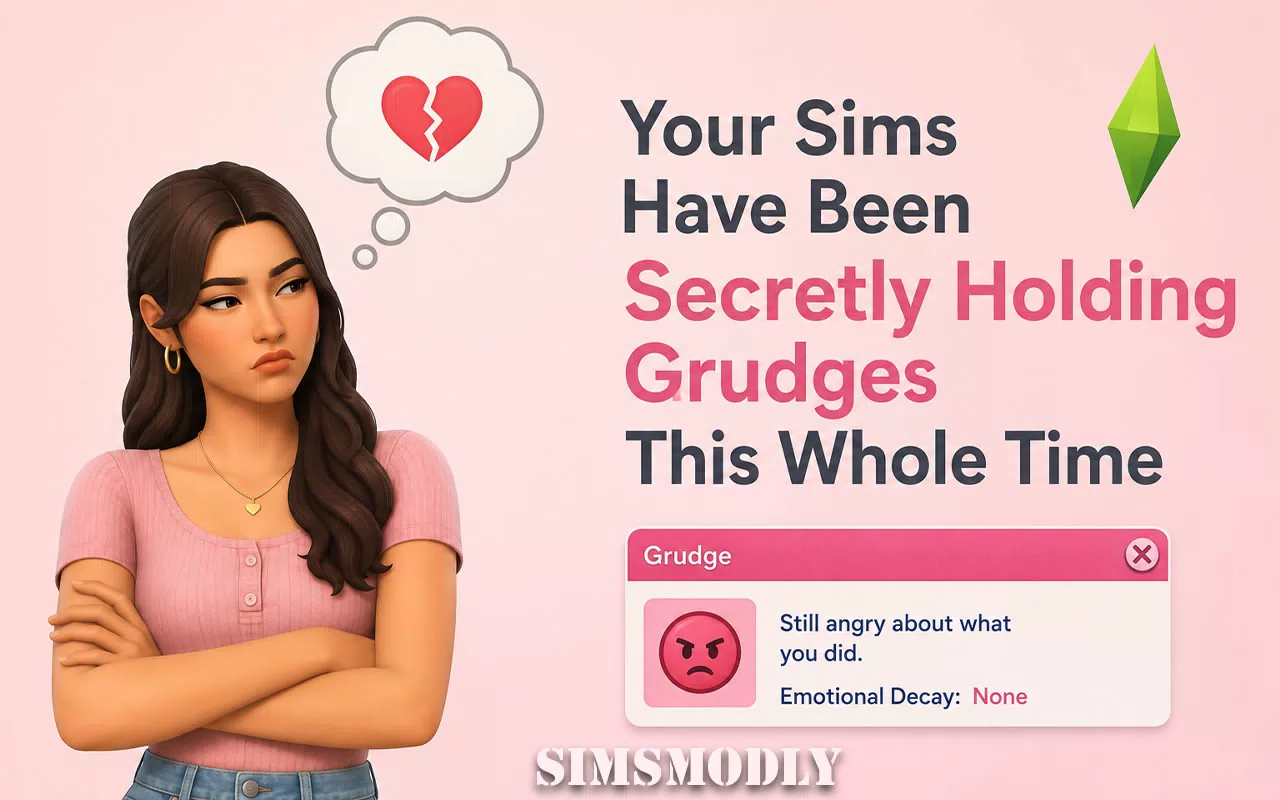
Cheat on a Sim's partner in The Sims 4, apologize, patch things up, and the relationship bar climbs right back to where it was. As far as the friendship or romance meter is concerned, it's like nothing happened. Most players read that as the game just not caring — Sims 4 relationships famously reset if you stop interacting, so why would betrayal be any different?
Except it isn't the same. There's a second, completely separate system running underneath the relationship bar that does remember, and it's been in the game since November 2020 without most players ever noticing it exists.
The System Living Underneath the Relationship Bar
It's called Sentiments, and it quietly shipped as a free update alongside the Snowy Escape expansion. The relationship number you see in the panel — the friendship or romance score — measures the overall history between two Sims and slowly resets toward neutral if they stop interacting. Sentiments don't work like that at all. They're tied to one specific, significant moment shared between two Sims, and they don't decay just from time passing the way the relationship bar does.
That distinction is the whole point of the system. Your Sim's partner can still technically be "Good Friends" with someone on the relationship bar while separately carrying a Furious About Cheating sentiment toward them — two different tracking systems, both true at once, both affecting behavior in different ways.
What A Sentiment Actually Does While It's Active
A sentiment isn't a label sitting quietly in a menu. While it's active, it changes how a Sim behaves any time the other Sim involved is nearby. A Sim carrying a Furious About Cheating sentiment gets genuinely strong angry or sad moodlets whenever they're near the Sim who cheated, is measurably more likely to autonomously choose Mean or Mischievous interactions toward them, and finds Friendly interactions failing far more often than normal. Flip it to something positive — Deeply in Love, for instance — and the same mechanism runs the other direction: strong Happy and Flirty moodlets, and a real autonomous pull toward Romantic and Friendly socials.
This is what separates a sentiment from an ordinary moodlet: it's not just coloring the mood, it's actively steering which interactions the Sim reaches for on their own, whether you're directing them or not.
Eight Categories, Not Just "Positive or Negative"
Sentiments don't just fall into two neat buckets. There are eight underlying types — four positive (Adoring, Close, Enamored, Motivating) and four negative (Guilty, Hurt, Furious, Bitter) — and each one covers a cluster of specific triggered sentiments underneath it. Across the base game and every pack that's added more since, the total count sits at 84 distinct sentiments, ranging from a first-kiss "Enamored" spike to a slow-burning "Festering Grudge" that colors an entire relationship for a long stretch of gameplay.
Sentiments also come in short-term and long-term flavors, and that distinction changes both duration and intensity. A shared adventure — climbing a mountain together, say — tends to generate something short-lived. Something with real emotional weight, like a betrayal, generates a long-term sentiment with a correspondingly stronger, longer-lasting pull on behavior.
The Detail Almost Nobody Realizes: They're Not Mutual
Here's the part that trips up even players who've heard of Sentiments in passing: they aren't automatically shared between both Sims. One Sim can hold a strong negative sentiment toward another while that other Sim feels nothing back, or even holds a positive sentiment in return. A Sim can be furious about a cheating partner while that partner still feels Deeply in Love with them — the asymmetry isn't a bug, it's the intended mechanic, and it's genuinely useful for anyone building out lopsided relationship drama in a save rather than assuming every emotional beat has to be symmetrical.
Each Sim can hold up to four sentiments toward any one other Sim at a time. Cross that limit with a new sentiment, and the weakest of the existing four gets bumped to make room — so a Sim's strongest, most recent, or most intense emotional history with someone is always what survives.
Why This Changes How You Should Read Autonomous Behavior
If you've ever watched a Sim autonomously snap at someone for seemingly no reason, or noticed two Sims who "should" be close constantly failing at friendly conversation, Sentiments are very likely the actual cause — not randomness, and not a glitch. Checking a Sim's relationship panel closely enough to see active sentiments (rather than just the friendship number) is the difference between guessing why your Sims are behaving a certain way and actually knowing.
Frequently Asked Questions
Do I need Snowy Escape installed to use Sentiments?
No. Sentiments launched as a free base-game update alongside Snowy Escape, so every player has access to the core system regardless of which packs they own — though some individual sentiments are pack-specific.
How many sentiments can a Sim have at once?
A Sim can hold up to four active sentiments toward any single other Sim; gaining a fifth replaces whichever of the existing four is weakest.
Are sentiments the same as the friendship or romance relationship bar?
No. The relationship bar tracks overall history and decays over time without interaction, while sentiments are tied to specific significant moments and don't fade just from time passing the same way.
Can two Sims have different sentiments toward each other for the same event?
Yes. Sentiments aren't automatically mutual — one Sim can hold a strong sentiment about a shared event while the other Sim feels differently or not at all.
Sources
Sentiment counts and specific triggers reflect community documentation compiled after each pack's release; new packs can add further sentiments not yet catalogued here.