Your Sims 4 Ghost's Cause of Death Secretly Controls How It Haunts You
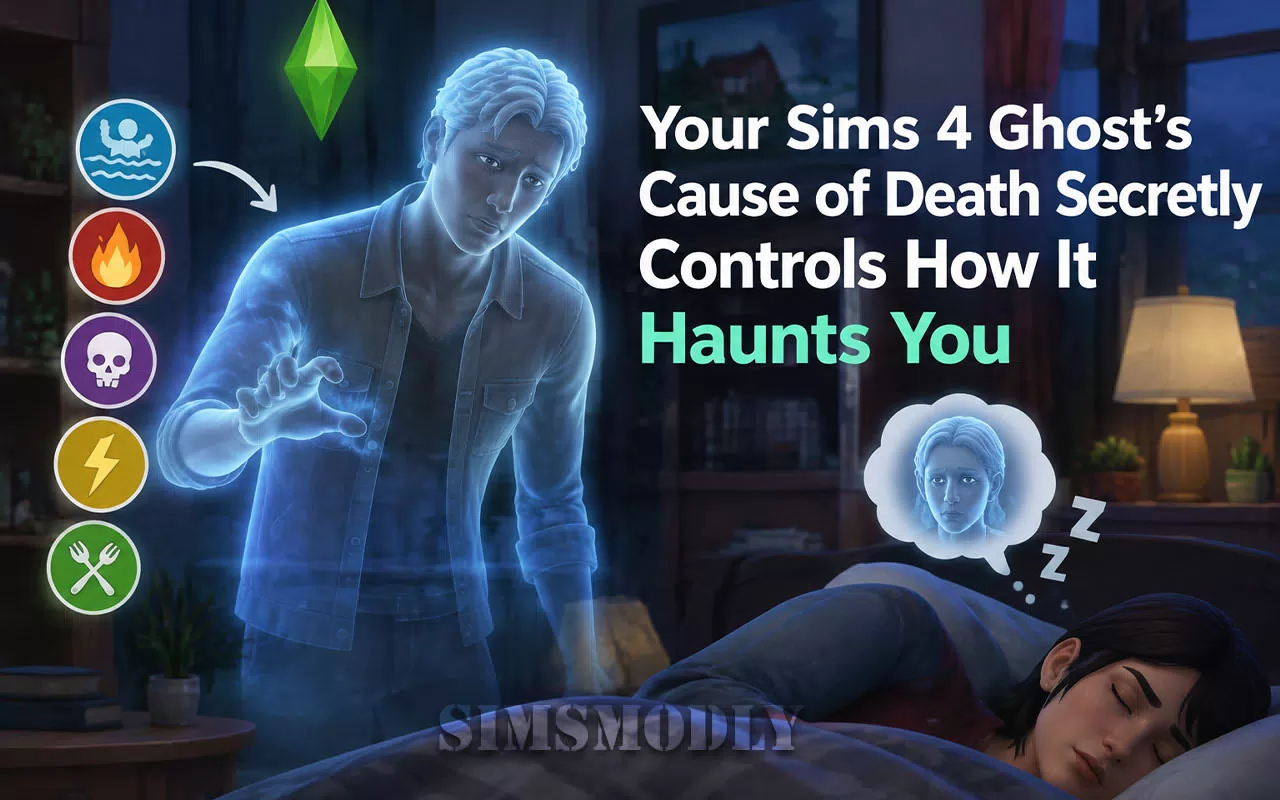
A ghost shows up in your house, and the instinct is to treat it like generic spooky furniture — something that passes through walls, scares a Sim occasionally, and otherwise just exists as background flavor. Then one night a ghost starts randomly setting furniture on fire, or leaves puddles of water across the hallway, or won't stop making everyone nearby uncomfortably Playful for no obvious reason, and it turns out none of that was random at all.
The Sims 4 quietly ties a ghost's actual haunting behavior to the specific way that Sim died — and with Life & Death now layering an entire power system on top of that, the difference between "annoying background ghost" and "genuinely useful spectral housemate" comes down to details almost nobody checks before creating one.
Color Tells You Mood, Not History
The first thing to clear up, because it trips people up constantly: a ghost's color reflects their current emotional state, the same emotion colors used for living Sims, not a permanent badge tied to how they died. A ghost glowing green isn't "the drowning ghost color" — it's simply a ghost who happens to be Inspired right now, and it'll shift the next time their mood changes. Death type doesn't paint them a fixed color; it shapes what kind of chaos they cause while they're haunting.
Death Type Is Where The Real Personality Lives
Every documented death type in The Sims 4 comes with its own distinct animation and, for most of them, a set of unique behaviors that show up specifically because of how that Sim died. A ghost who died from anger tends to slip into angry moods more easily than other ghosts. A ghost who drowned trails a dripping water effect and leaves puddles scattered around wherever it wanders. A ghost who died in a fire flickers with a flame effect, and — far more disruptively — can randomly start fires around the house, or be directed to start them deliberately if you're playing as that ghost yourself. A ghost who died laughing tends to stay Playful and spreads that mood to nearby Sims just by being around. Not every cause of death gets a unique effect, but enough of them do that "which death type" is genuinely one of the more important decisions if you're deliberately building a ghost into your household rather than just letting one happen naturally.
That list applies across every player, on any save, as long as the pack unlocking that specific death type is installed — and critically, you don't have to actually kill a Sim off to access these effects. Building a ghost directly in Create-A-Sim lets you pick any cause of death from the menu and get the matching haunting behavior from the start.
Natural Deaths vs. Emotional Deaths
Beneath the individual effects, every death type sorts into one of two broader categories. Drowning, Fire, Electrocution, Hunger, Old Age, Overexertion, and Cowplant deaths fall under Natural causes. Embarrassment, Anger, and Hysteria fall under Emotional causes — deaths that happen because a Sim got stuck at the most extreme intensity of a single emotion for too long, with Hysteria in particular escalating through four rising stages (Embarrassed, Very Embarrassed, Humiliated, and finally Mortified) before it becomes fatal. That's a meaningfully different kind of death than "old age" or "drowning" — it's entirely mood-driven, and it's avoidable in the moment through specific interactions that pull a Sim's emotional intensity back down before it reaches the fatal threshold.
Life & Death Turned Haunting Into An Actual Skill Tree
For a decade, ghost behavior beyond the death-type effects was mostly passive — mild nuisance, occasional scare interaction, nothing you actively built toward. Life & Death changed that by adding Ghost Powers: a full talent tree exclusive to playable ghosts, unlocked the same way Vampire and Werewolf progression works, where using spectral abilities earns access to further ones. Every ghost gets access to the same power tree regardless of death type, and the meaningful choice becomes whether you're building a ghost toward benevolent, helpful powers or toward pure mischief — a genuine playstyle decision layered on top of whatever passive haunting quirks their death type already gave them.
What A Ghost Actually Keeps From Their Living Life
Bringing a ghost into an active household isn't starting from zero. A resurrected or kept ghost retains their full skill levels, established relationships, and career progress from before they died — they simply continue where they left off rather than resetting. What they lose is the ability to age naturally, since ghosts are ageless in their spectral form, though a ghost can still be resurrected back to living status later if you want the aging clock to resume.
Building A Ghost On Purpose
If you're deliberately creating a ghost rather than waiting for one to happen in play, a few decisions matter more than they first appear to:
Pick the death type for the haunting behavior you actually want, not just the flavor text — a Fire ghost is a genuinely disruptive housemate capable of accidental property damage, while a Laughter ghost is closer to a low-stakes mood booster for the household.
Keep the urn or tombstone on the lot if you want the ghost to stick around as a haunting presence — releasing a spirit to the Netherworld removes it permanently.
Decide on a Ghost Powers direction early if you own Life & Death — the talent tree splits meaningfully between helpful and mischievous paths, and progress builds cumulatively the more that path gets used.
Don't expect emotional deaths to be simply "worse." Anger, Embarrassment, and Hysteria deaths are avoidable in the moment through specific calming interactions, which makes them more a storytelling choice than an inevitability if you'd rather steer a Sim away from that fate.
Frequently Asked Questions
Does a ghost's color show how they died?
No. A ghost's color reflects their current emotional state, the same as a living Sim's mood colors — it changes as their emotions change and isn't a fixed marker of their death type.
Do all death types come with unique haunting effects?
Most do, though not every death type has a documented unique behavior — deaths like Fire, Drowning, Anger, and Laughter each come with distinct effects, while some are more subtle or purely cosmetic.
Can I choose a ghost's cause of death without actually killing a Sim?
Yes. Creating a ghost directly in Create-A-Sim lets you select any cause of death from the menu and get that death type's associated haunting effects from the start.
What did Life & Death change about ghosts?
It added Ghost Powers, a full talent tree exclusive to playable ghosts that unlocks further abilities the more they're used, letting players build a ghost toward helpful or mischievous specializations.
Sources
Death type effects and Ghost Powers reflect documentation gathered since the Life & Death expansion's October 2024 release; some behaviors require the specific pack that unlocks that cause of death.